
When you catch a glimpse of an elite alpinist scaling a mountain with ease, It’s easy (and dare a say comforting?) to write it off as genetic lottery or “superhuman” fitness.
But if you talk to elite alpinists—the IFMGA guides, the Steve Houses, even the Kilian Jornets (although he may be doing something totally different)—you find something surprising. They aren’t training harder than you in the way you might think. They are training smarter.
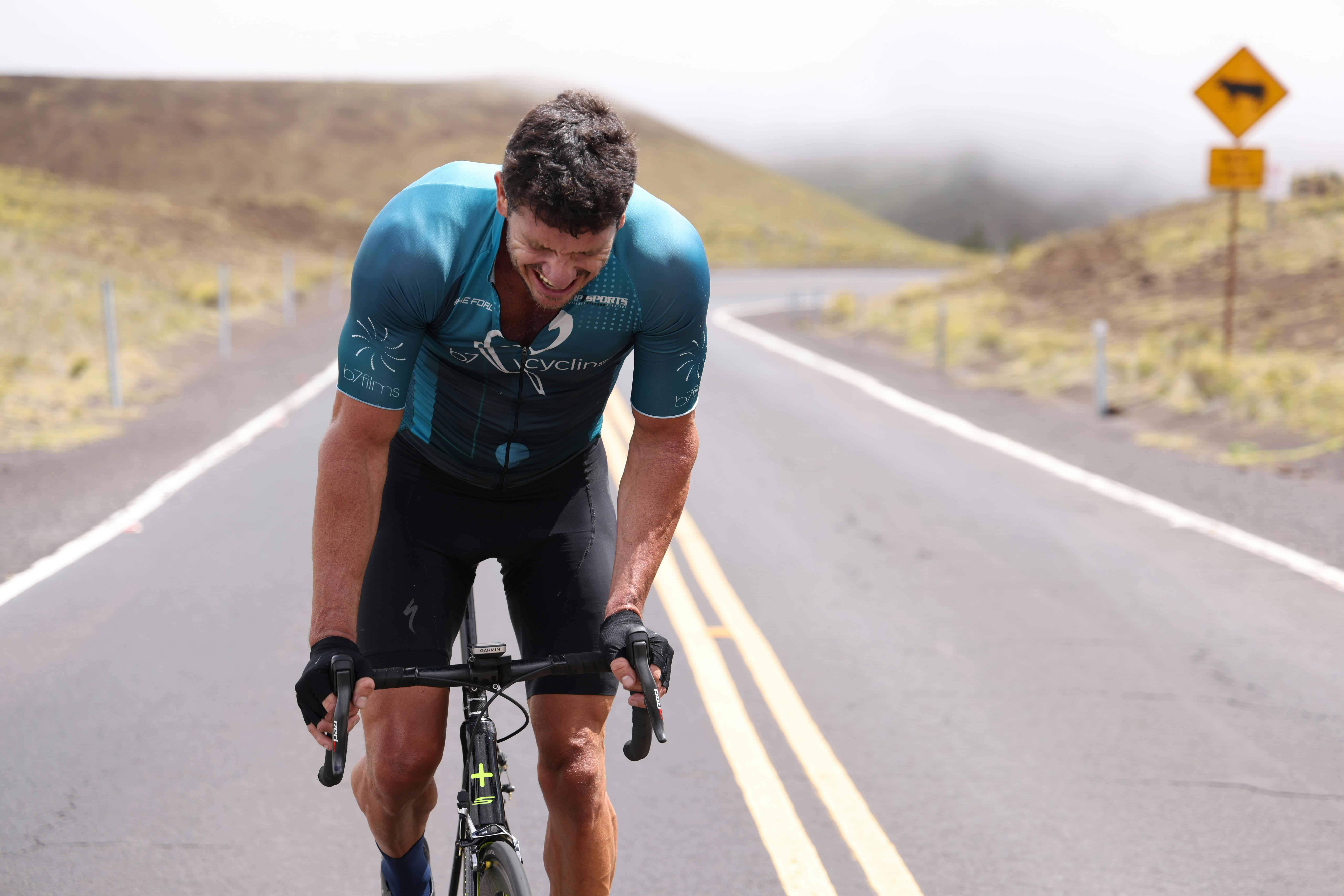
Here’s my point. This type of feat isn’t unattainable. You can do it, too. In fact, you might be closer than you think, but you’re falling into a training trap that hurts you rather than helps you.
Most amateurs train with a “no pain, no gain” mentality. They treat every run like a race and every hike like a time trial. They live in the “red zone” of moderate-to-hard intensity, believing that suffering equals progress.
Elite alpinists know better. They follow a specific, science-backed protocol that prioritizes aerobic capacity over anaerobic thrashing. They understand that the summit isn’t won by who can suffer the most; it’s won by who is the most efficient.
Whether you are training for Aconcagua, a mountaineering objective in the Cascades, or just want to stop getting dropped on the uphill skin track, this is the blueprint.
The “Unsexy” Truth: Capacity Before Utilization
If there is one concept that separates the elite athlete from the struggling amateur, it is this: Capacity vs. Utilization.
Think of your fitness like a bank account.
- Capacity (The Savings Account): This is the size of your engine (to quote Scott Johnston in Training for the Uphill Athlete). It is your aerobic base—the ability of your body to use oxygen and energy as fuel over long durations.
- Utilization (The Spending Spree): This is your ability to go fast and hard (HIIT, sprints, threshold work). It burns “expensive” fuel (glycogen) and creates high fatigue.
Amateurs love utilization training because it feels like work. It leaves you sweaty and sore and feeling accomplished.
But: elite alpinists spend 80-90% of their time building capacity, not dying on Zone 4 hill repeats.
Why? Because at its core, mountaineering is an aerobic sport. Even on the steepest, hardest summit push, you’re never sprinting. You’re engaging in a long, slow burn. If you haven’t built a sufficient aerobic engine, no amount of interval sprinting will save you when you’re eight hours into a climb at high altitude.
The Aerobic Deficiency Syndrome (ADS)
“Why do I struggle going up hills?”
Let’s bring this home for you. If you struggle on hills, it’s likely not because your legs are weak. Instead, it might be that you have Aerobic Deficiency Syndrome.
This happens when your aerobic threshold (the point where you switch from burning mostly fat to burning glucose) is too low. You start hiking, and within minutes, your heart rate spikes, your breathing becomes rapid (you’ve hit your ventilatory threshold), and you’re forced to slow down. You are redlining just to walk.
The elite alpinist fixes this by spending hundreds of hours in Zone 2 (an easy, conversational pace). This boring, unglamorous work increases mitochondrial density and capillary networks. It teaches your body to be a fuel-efficient hybrid engine rather than a gas-guzzling muscle car.
→ Don’t be the Chevy Camaro on the mountain. Be okay with being a rugged, badass Prius. Because you’ll win the long game.
The 3 Golden Rules of Mountaineering Training
In the bible of mountain training, Training for the New Alpinism, Scott Johnston and Steve House outline three non-negotiable principles. If you want to know what are the three golden rules of mountaineering training, memorize these:
- Continuity: Consistency beats intensity. It is better to do one hour of training every day than seven hours once a week. You need a constant, low-level stimulus to force your body to adapt.
- Gradualness: You cannot cram for a mountain. Tendons, ligaments, and aerobic enzymes take months, not weeks, to build. Volume must increase slowly to avoid injury.
- Modulation: You cannot go hard all the time. Hard weeks must be followed by easy weeks. Hard workouts must be followed by recovery. This wave-like structure allows for “supercompensation”—where your body rebuilds itself stronger than before.
The Protocol: How to Build the Uphill Engine
So, how to do uphill training like a pro? Answer: You build it in layers.
Phase 1: The Aerobic Base (Weeks 1-8)
Your goal here is volume. You are hiking, running, or skinning at a strictly controlled heart rate.
- The Test: find your Lactate Threshold (top of your Zone 2 heart rate)
- Psssst. ‘Traditional’ advice uses your ability to hold a conversation at this pace as the barometer. But… if you know a thing or two about Carbon Dioxide Tolerance, and I hope you do if you’re here with me, then you know you can go well above Zone 2 breathing nasally.
- The Method: Long, slow distance. This is unglamorous. It feels “too easy.” But this is how you build the metabolic machinery to handle high altitude.
Phase 2: Muscular Endurance (The Secret Weapon)
Once you have the engine, you need the chassis to support it. Muscular Endurance (ME) is the ability of your legs to produce force, over and over, without fatigue.
In mountaineering, this means keeping pace up a steep slope for hours.
- The Elite Move: The “ME Workout.” This involves finding a steep hill (or a treadmill set to 15% incline) and hiking with a pack filled with water jugs. Start with 15-20% of your body weight and build up to 30-40%.
- The Goal: You want your legs to burn, but your heart rate to stay in Zone 2. You are training the muscle fibers to resist fatigue, specifically for the uphill movement.
- Psssst: if you go up to Zone 3, above your lactate threshold, that means lactate would accumulate faster than you can dispel it. Which leads to an involuntary and unavoidable muscular shutdown.
Phase 3: High-Intensity Taper (The Finishing Touch)
Only sparingly do elites add significant high-intensity intervals.
- What is the 30 20 10 rule for HIIT? A popular method involves 30 seconds easy, 20 seconds moderate, 10 seconds all-out sprint. This can sharpen your VO2 max.
- What is the 5 4 3 2 1 running method? Another interval structure (5 minutes hard, 4 minutes hard, etc.) used to build tolerance to high lactate levels.
These workouts are the icing on the cake, not the cake itself.
The “Missing Link”: Respiratory Training
Here is where the gap exists between the “old school” and the modern elite.
Traditional training focuses almost entirely on the legs and the heart. But at altitude, the limiter is rarely your well-trained legs. It’s your lungs.
How to prepare your lungs for high altitude? You treat your respiratory system like any other muscle group.
Elite alpinists are increasingly incorporating Respiratory Muscle Training (RMT) and CO2 tolerance work into their protocol.
- RMT (The Dumbbell for Your Diaphragm): Using a resistance device to strengthen the inspiratory muscles (diaphragm and intercostals). A stronger diaphragm delays “respiratory fatigue,” which can improve your ability to bring in oxygen from the thin air at altitude. Plus, in the most extreme cases, it can prevent metaboreflex, where your respiratory muscles steal blood flow away from your legs.
- CO2 Tolerance: The feeling of “air hunger” is most often triggered by carbon dioxide, not a lack of oxygen. By training your tolerance to CO2, you reduce over-breathing and hyperventilation, maintaining efficient breathing mechanics even when the air is thin.
This is Recal’s specialty. We bridge the gap between physical fitness and respiratory performance. Because you can have the strongest legs in the world, but if your breathing fails, everything fails.
How to Start at Sea Level (No Mountain Required)
Most of us don’t live in Chamonix or Aspen. We live on the coasts, at sea level. Yes, I’m talking to you, Amazon employee in the Seattle area.
But the question is: can you still train for high altitude?
Answer: sure. In fact, I’ll do you one better. Training at sea level has advantages (you can recover faster). So take that, mountain dwellers of the sky. Try recovering at 10k feet. Not so easy.
The Urban Alpinist Toolkit:
- The Stair Machine is Your Sherpa: This is your ticket to the clouds… and the most sport-specific tool for uphill training.
- The Workout: Put on a pack (start light and build your way up). Set the machine to a slow, rhythmic pace (maybe 50 steps per minute?). Climb for 45-60 minutes. Focus on driving through the heel to engage the glutes (the power engine of climbing) and quads.
- Hypoxic Simulation (Breathwork): No, you don’t need an expensive altitude tent. You can simulate the bodily hypoxic / hypercapnic stress of altitude climbing using breath-hold training.
- The Protocol: Perform breath-hold walks (apnea walks) to desensitize your chemoreceptors to CO2. This mimics the “out of breath” sensation of the summit push while you are safe at sea level. Work your way up to jogging… and even all-out sprints. This protocol is called Intermittent Hypoxic-Hypercapnic Training (and should be done by only the healthiest of individuals)
- The 3 Layer Rule (Gear & Prep): Training isn’t just physical; it’s logistical. What is the 3 layer rule for hiking?
- Base Layer: Wicks moisture (merino wool or synthetic). Never cotton.
- Mid Layer: Insulates (fleece or light puffy). Traps heat.
- Shell Layer: Protects (Gore-Tex or windbreaker). Stops wind and rain.
- The Training Application: Train in your gear. Do your long hikes in the boots and layers you will wear on the mountain. Friction blisters end more trips than fatigue does.
Conclusion: The Summit is Your Lag Measure
In business, we talk about “lead measures” (or at least I’m nerdy enough to). This is what you can control and what you do often. “Lag measures” are the result – oftentimes what you can’t control.
The summit is your lag measure.
It is the result of thousands of small, unsexy decisions made months before you ever stepped on the plane. It is the result of skipping the happy hour to do a Zone 2 run in the rain. It is the result of waking up just a bit earlier to do your RMT exercises.
Elite performance isn’t about being superhuman. It’s about being boringly-consistent.
You have the protocol. You know the science. The only variable left is the work.
Are you training your legs? Or are you training your legs AND your lungs?
As your breathwork coach, THIS is my question for you.
Now, let’s get to work!